Sundown · Summer 2026–27
Got a home battery?
Keep your energy plan.
Get paid to help the grid.
Up to $200 per household, capped and based on
participation.
Connecting up to 30 homes
for the first pilot.
What this is
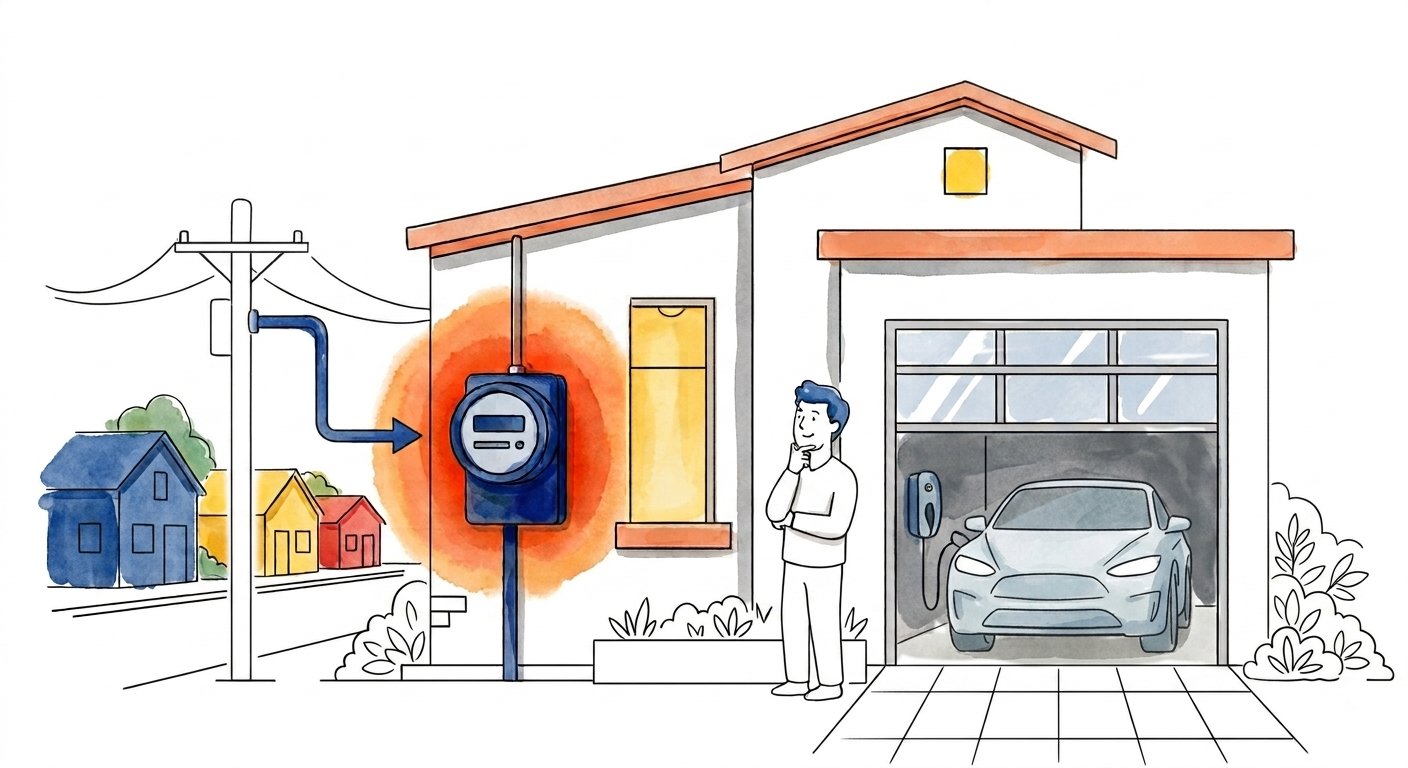
Demand response saves energy at a grid location instead of firing up another generator, and pays the homes and businesses that shift when they use power. Electricity is usually tightest on hot summer afternoons, when air conditioning across thousands of homes peaks at the same time. The grid has to meet that peak with whatever is available, and the last bit of it is the most expensive and usually the dirtiest. If enough homes with batteries discharge during those few hours, the peak gets smaller — and everyone's bills feel it, not just the households taking part.
Batteries are very good at this. They charge through the day from abundant solar and hold that energy until the sun goes down and the price is high. And the response is instant.
Who we're looking for
We identified a grid need in Melbourne's west, so that is our first preference. However, we will gladly consider any home in Australia: it is the same survey, and where the registrations land helps us decide which integration path to build next. In order of preference:
- Postcodes 3029 and 3030 (Tarneit, Truganina and Werribee), in Melbourne's west
- Anywhere in Victoria
- Any state on the NEM National Electricity Market (VIC, NSW, QLD, SA, TAS)
- Anywhere in Australia, including Western Australia and the Northern Territory
What we'd ask of you
Three things, and none of them involve changing your energy plan.
- Connect your battery to Daydream through its app or cloud account. No hardware, no site visit.
- We watch prices and grid conditions and tell your battery when the network is tight or wholesale prices spike. Ideally that dispatches straight to your battery, and you'll get an email or SMS either way.
- Around 6 times across summer, your battery discharges during those windows — doing what it was built for, at the moment it's worth the most. You set a reserve level we never go below, and you can opt out of any event.
That's the whole pilot. We're proving something simple: that ordinary households with batteries can help hold up the grid, and get paid for it.
Registering does not guarantee a place. We have 30 spots, the registration deadline is 30 September 2026, and we'll confirm participant selection during September 2026. The pilot is intended to run from October 2026 until March 2027. Pilot payment is capped at $200 per household and may be adjusted based on participation. We're an early-stage Melbourne company — this trial is how we prove the idea works, and we'll share what we learn with everyone who takes part.
The survey
Three questions about your setup, then how to reach you. About a minute.